
Academy articles
Clear advice for serious preparation.
Practical guidance from Arun Sharma Academy faculty and mentors.

Words You Can Learn from Harry Potter: 27 Spells That Teach CAT Vocabulary
Vocabulary lists fade by morning. 27 Harry Potter spells, the Latin roots inside them, and the English word families they unlock for CAT VARC, with a worked RC example.
Read more →
After the CAT Result: The GDPI Timeline Nobody Explains in Advance
The CAT result opens a second season of forms, shortlists, WAT-PI rounds and waitlists. The stages in order, last season's real dates, and what to do inside each one.
Read more →
Preparing for CAT While Working Full Time: A Realistic Weekday Structure
A CAT plan built for the ninety usable minutes a workday actually leaves you, with weekend mock blocks, a weekly time grid and a rule for losing a week without losing the plan.
Read more →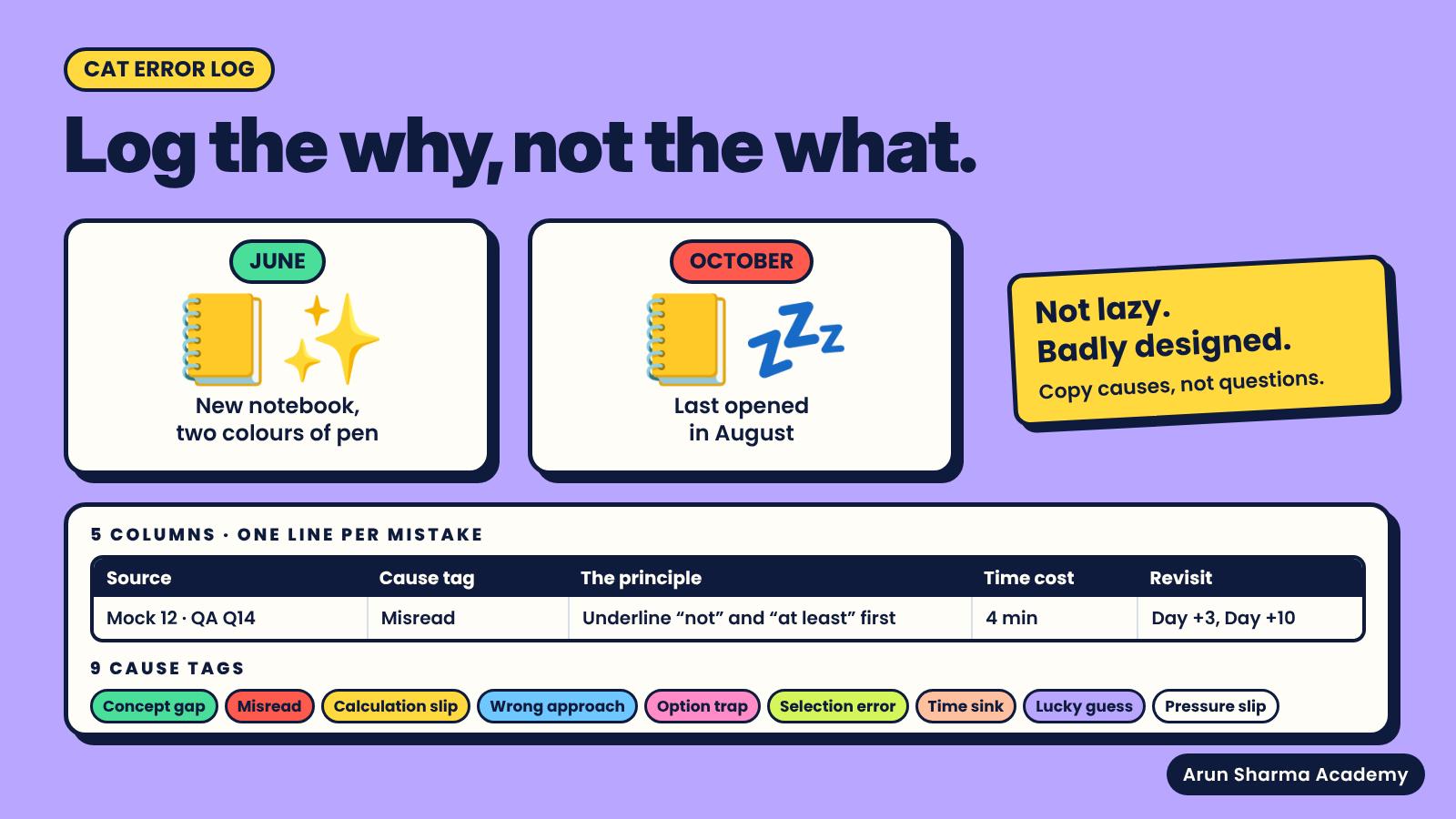
How to Build a CAT Error Log You Will Actually Open Again
Most error logs die within weeks because they record what went wrong instead of why. A five-column format, nine cause tags and a revisit rule that lasts the whole season.
Read more →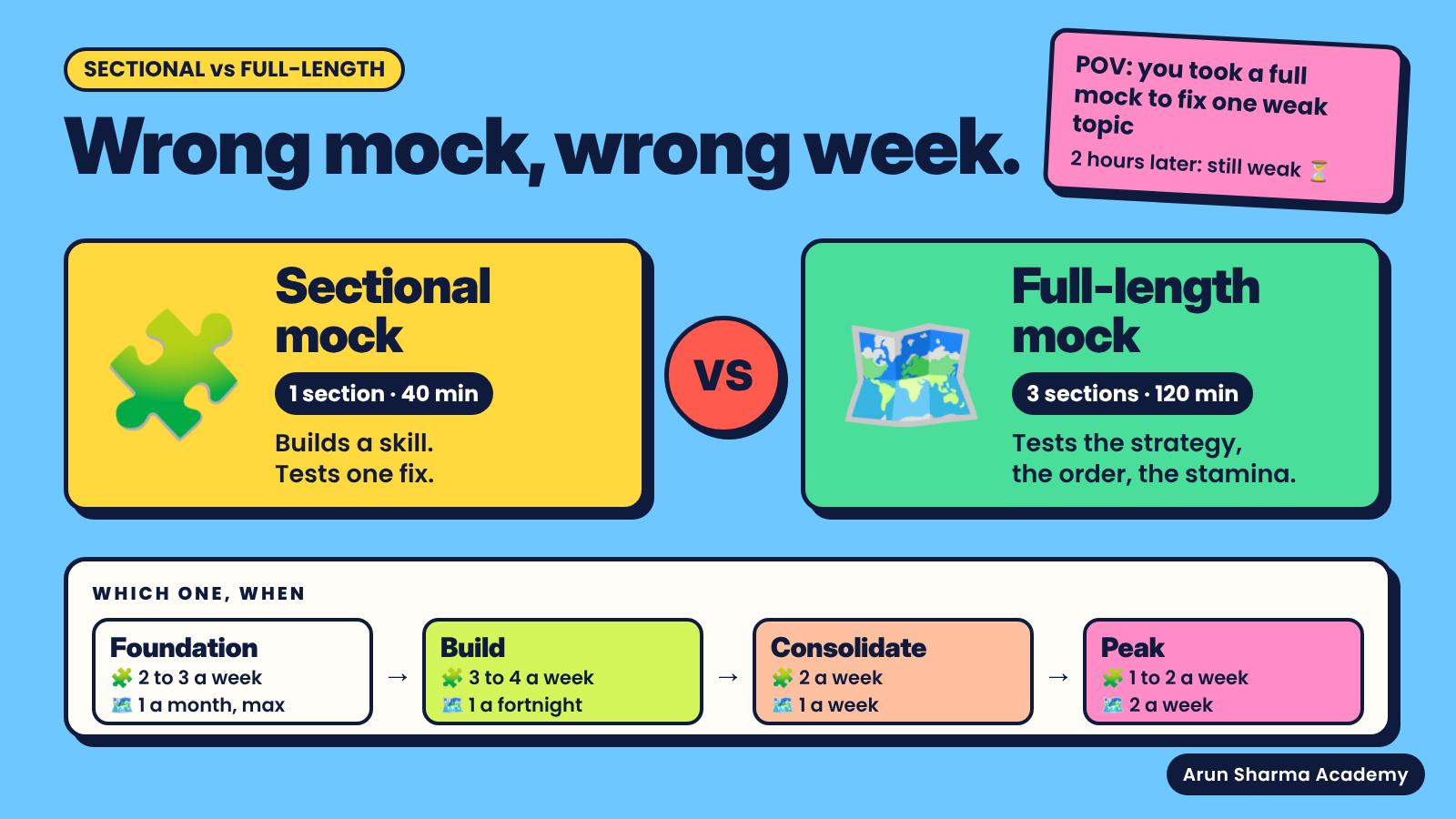
Sectional Mocks vs Full-Length Mocks: When Each One Actually Helps
Sectional mocks build a skill. Full-length mocks test a strategy. When to use each one, how many to take at every stage of CAT preparation, and the signs you are taking too many.
Read more →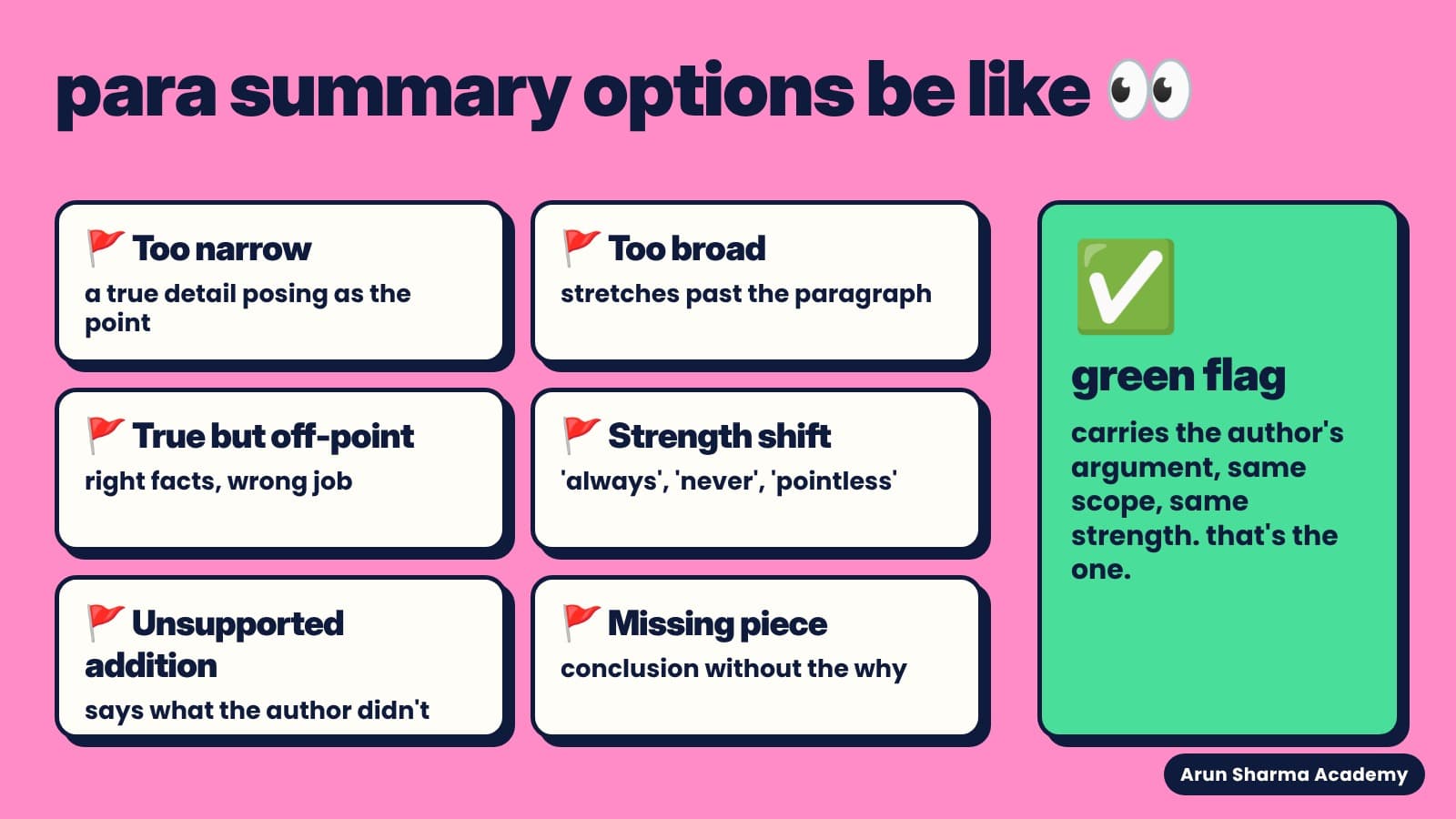
Para Summary Questions in CAT: How to Spot the Trap Option
Wrong options in para summary questions fail in predictable ways. The four main traps, two quieter ones, and the order of elimination that saves time.
Read more →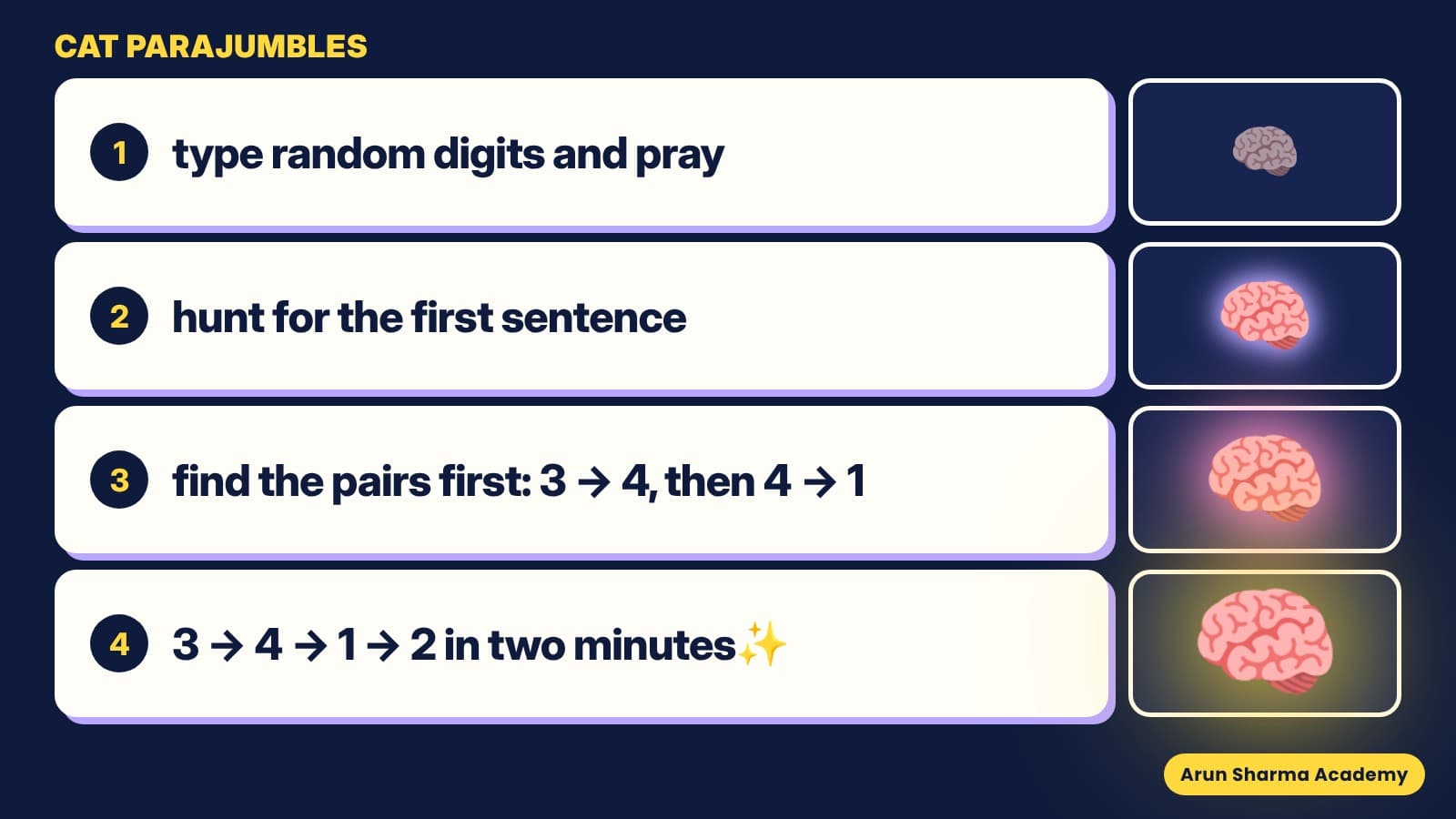
CAT Parajumbles: The Link-First Method That Beats Guessing
Hunting for the opening sentence is the slowest way to solve a parajumble. A link-first method that builds the order from sentence pairs, with a fully worked example.
Read more →
What to Read Every Day for CAT VARC, and What Is Quietly Wasting Your Time
Reading more doesn't help on its own. A daily CAT reading plan built around the kinds of passages the exam actually uses, and the popular habits that don't carry over.
Read more →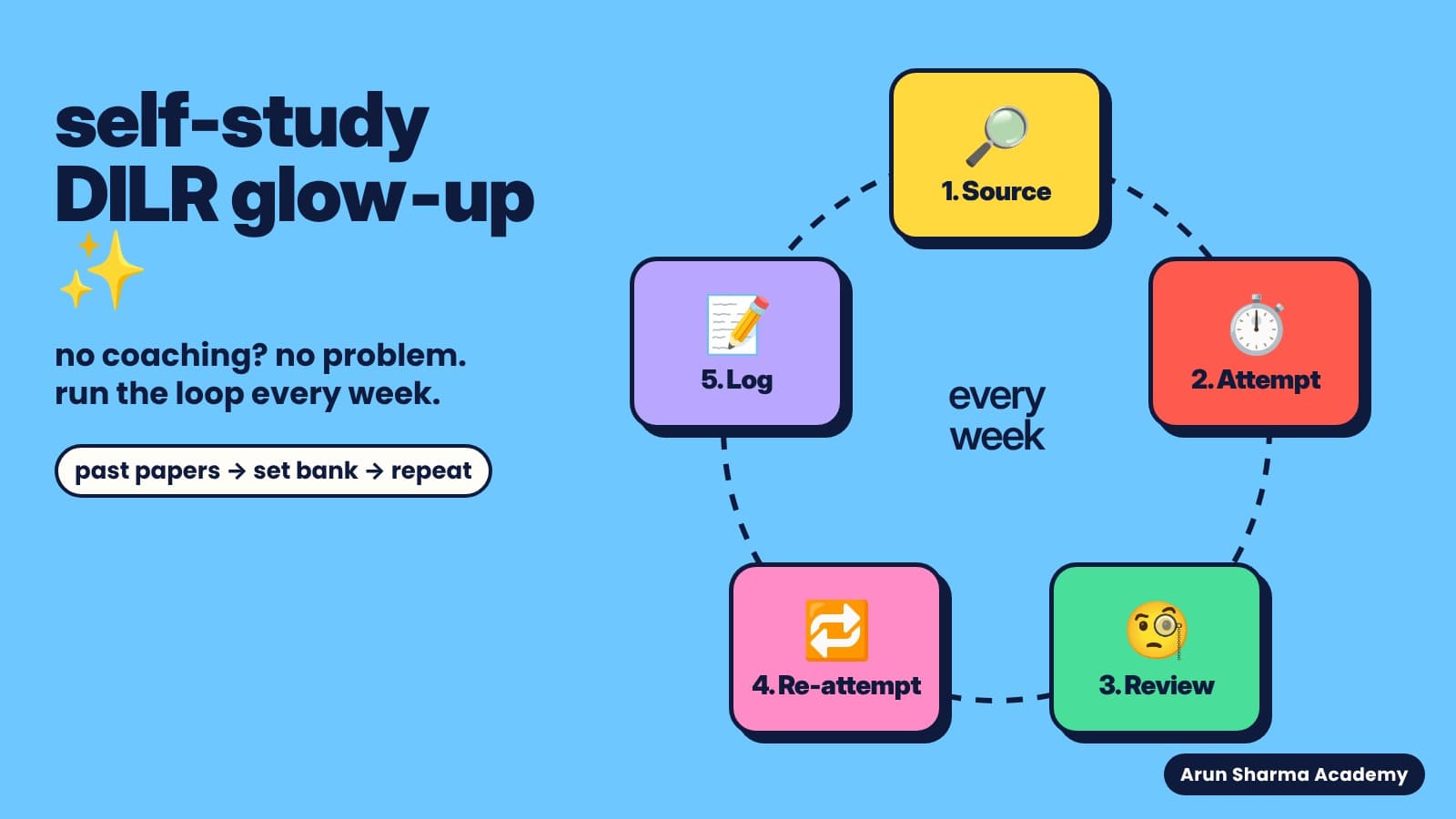
Practising DILR Without a Coaching Institute: Where the Sets Come From and How to Use Them
Self-preparation in DILR usually stalls for a sourcing reason rather than a talent reason. Where to find usable sets, how many to do each week, and the review loop that makes them count.
Read more →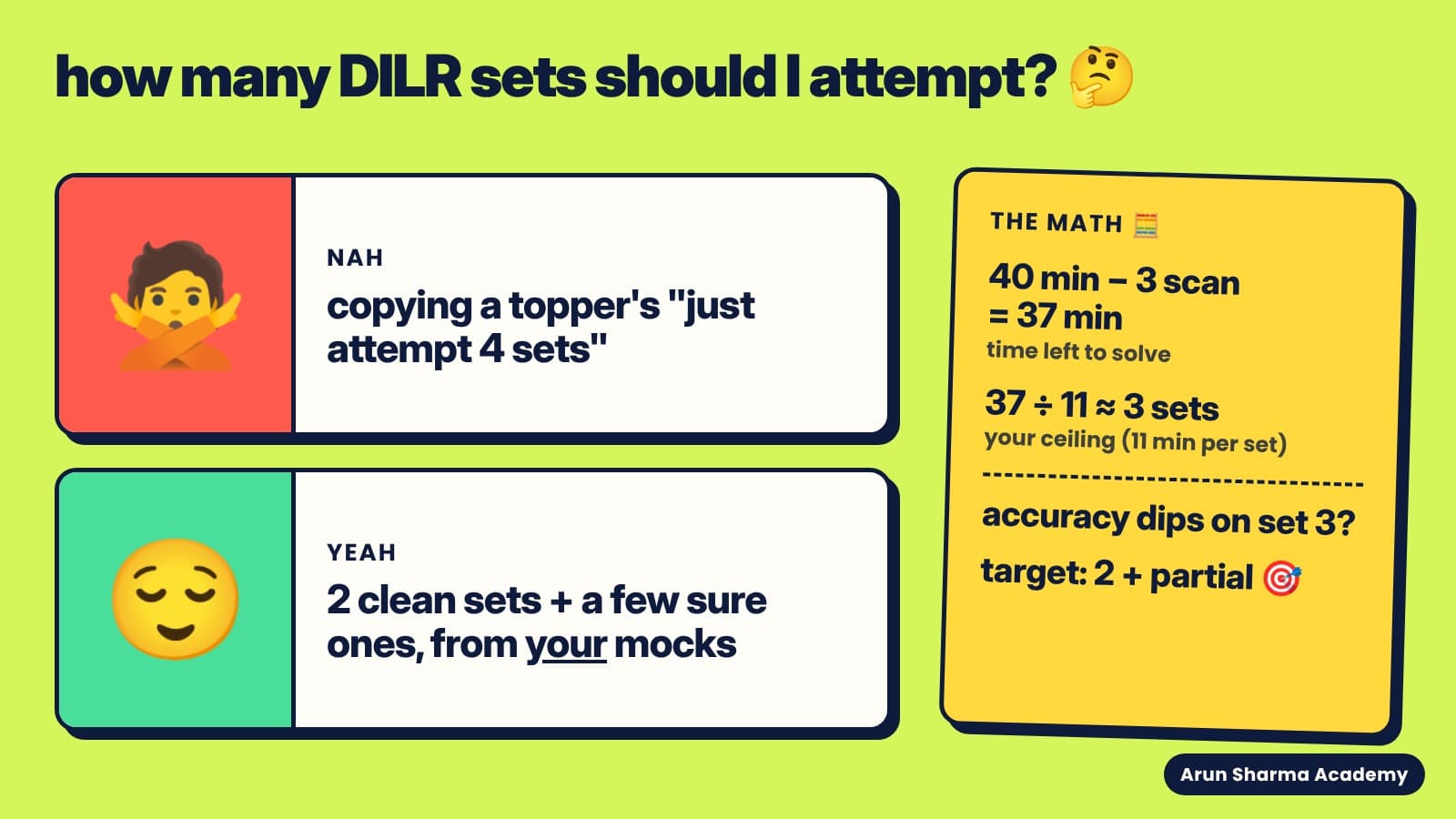
How Many DILR Sets Should You Attempt in CAT?
Attempt count is the wrong first question. How accuracy, set difficulty and your own time per set decide the number, and how to work yours out from mock data.
Read more →
CAT DILR Set Types: How to Recognise Each One in the First Minute
Most CAT DILR sets are built on a handful of recurring structures dressed in new stories. How to name the type inside the first minute and choose the opening move that fits it.
Read more →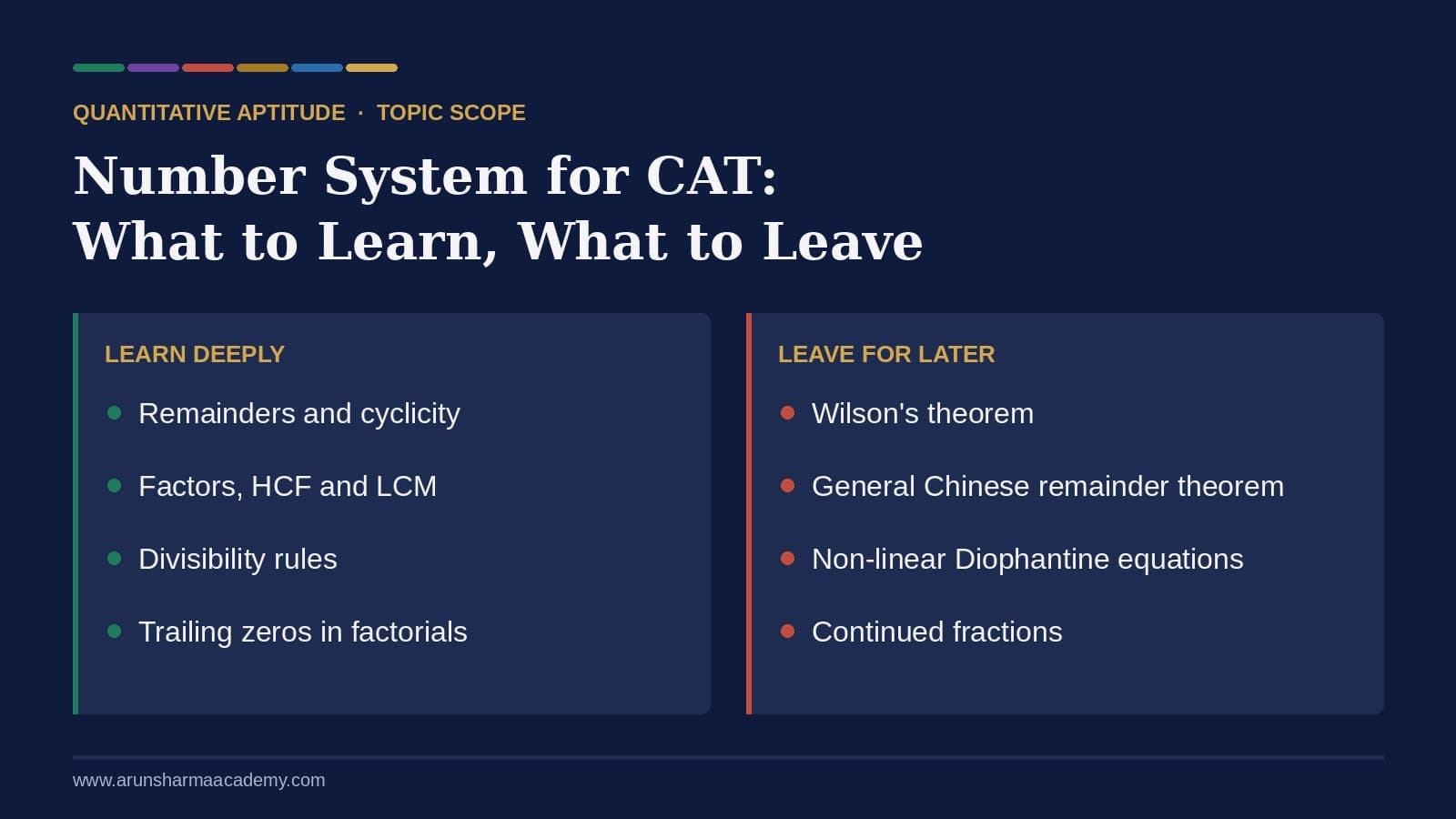
The Number System for CAT: What to Learn Deeply and What to Leave Alone
The number system rewards depth in three places and punishes breadth everywhere else. A scoped study list with the sub-topics that are safe to leave alone.
Read more →
CAT Quant Topic Weightage: Which Areas Return the Most Marks per Study Hour
Well, not every quant topic pays the same return. A marks-per-study-hour reading of the quant syllabus, counted from actual CAT papers rather than guesswork.
Read more →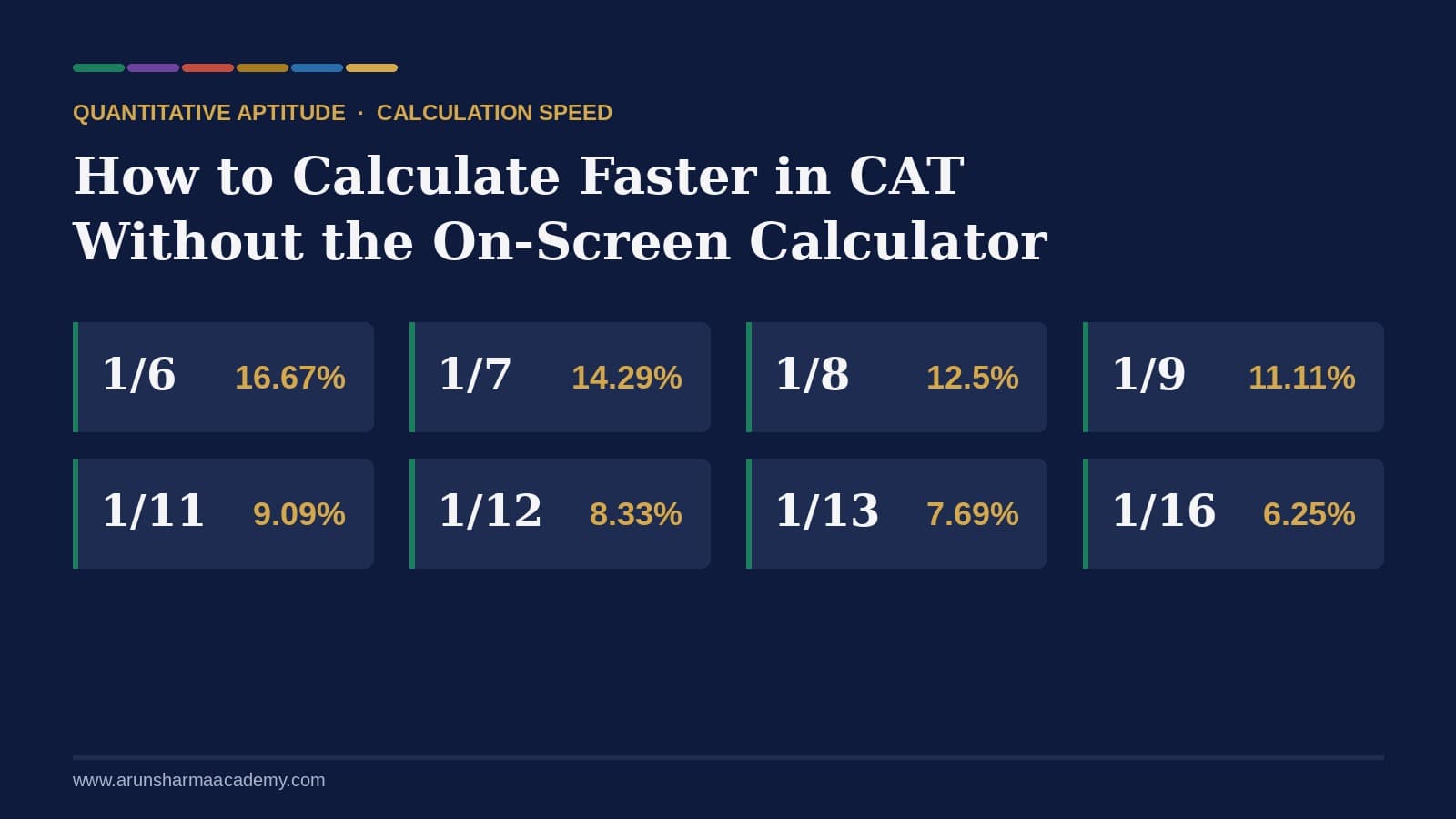
How to Calculate Faster in CAT Without Reaching for the On-Screen Calculator
The CAT on-screen calculator costs more time than it saves. The conversions, approximation rules and daily drill that cut minutes off your quant section without losing accuracy.
Read more →
How to Build a CAT Preparation Plan That Survives Busy Weeks
Some text about the blog, Some text about the blog, Some text about the blog, Some text about the blog
Read more →